How to Relieve Ball of Foot Pain: Effective Solutions
A lot of people look up how to relieve ball of foot pain when a normal day suddenly becomes awkward. You stand up from the couch, head out for a walk, or start down a trail, and that sharp soreness under the toes changes how you move.
In Flagstaff, that problem shows up fast. One long shift on hard floors, one run on uneven ground, or one weekend in shoes that looked fine but did not support your forefoot can leave the ball of the foot tender, swollen, or burning. The good news is that many cases respond well to the right combination of pressure relief, shoe changes, targeted support, and timely podiatry care.
That Sharp Pain Under Your Toes A Familiar Problem in Flagstaff
One of the most common stories behind forefoot pain is simple. A person feels fine at the start of the day, then notices a hot, bruised, or burning feeling under the toes by afternoon. Walking downtown becomes irritating. Hiking plans get cut short. Even standing in the kitchen starts to feel like too much.
That pain often has a name: metatarsalgia. This term refers to pain in the ball of the foot, usually where pressure builds beneath the metatarsal heads.
For many people, the discomfort is not dramatic at first. It may feel like stepping on a pebble, a sore spot in a running shoe, or tenderness that appears only when pushing off. Then it lingers. Then it changes your gait. Then the calf, ankle, or opposite foot starts compensating.
The problem is common. Seventy-five percent of Americans experience foot pain at some point in their lives, with ball of foot pain, known as metatarsalgia, being a common form caused by high-impact activities or ill-fitting shoes that inflame pressure points in the forefoot (PPS Chicago).
Why it flares up in Northern Arizona
Flagstaff residents put their feet to work. Trails, hills, long days on uneven ground, winter boots, work shoes, and active weekends all load the forefoot in different ways. Even people who are not runners can develop ball of foot pain from repeated pressure and poor shoe mechanics.
A few patterns show up often:
- Activity overload: A jump in walking, hiking, court sports, or running can irritate the forefoot.
- Shoe pressure: Narrow toe boxes, worn-out soles, and high heels push load toward the front of the foot.
- Hard surfaces: Standing and walking on firm floors can make a sensitive metatarsal area feel worse.
Key takeaway: Ball of foot pain is often a pressure problem before it becomes a bigger injury problem.
What relief usually requires
The fastest path to improvement is rarely one trick. Massage alone usually does not fix it. Ignoring it rarely helps. Relief usually comes from reducing pressure, calming irritation, supporting the foot better, and addressing the reason the forefoot is overloaded in the first place.
Immediate At-Home Relief for Ball of Foot Pain
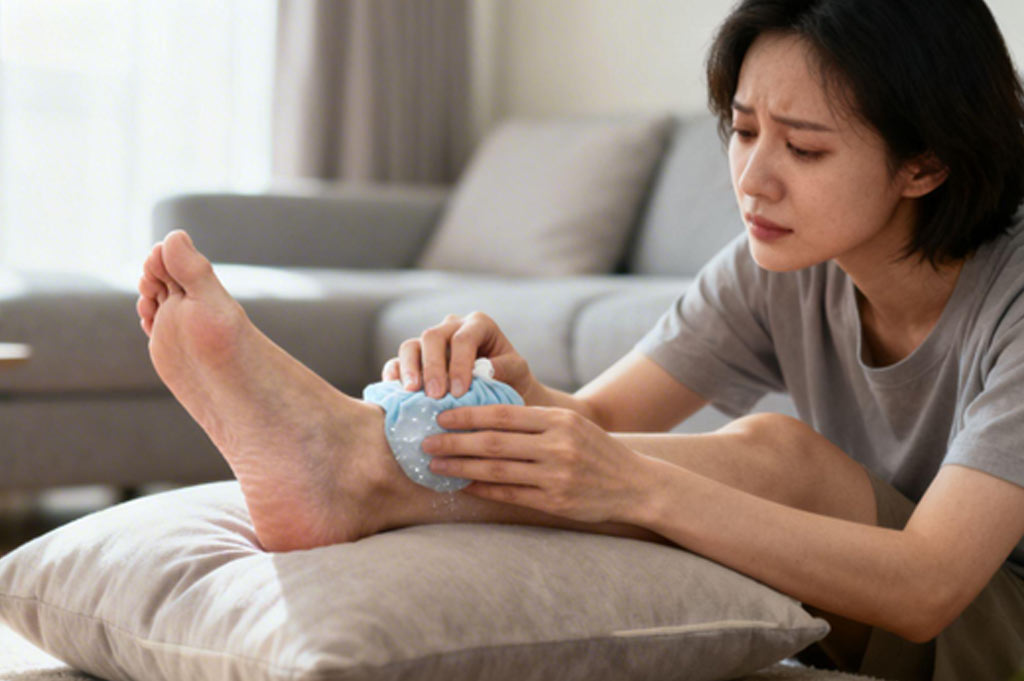
When the ball of your foot is flared up, the first job is to calm the tissue down. Do that well, and walking becomes easier. Skip that step, and even good shoes or exercises may not help much because the area is still irritated.
Start with RICE done correctly
A strong first response is the RICE method. For ball of foot pain, the details matter. Key relief protocols emphasize the RICE method plus targeted interventions: ice for 15-20 minutes, 3-4 times daily, reducing inflammation via vasoconstriction; metatarsal pads under metatarsal heads to offload pressure, validated by clinical research (Hinge Health).
Use it like this:
- Rest the forefoot Stop the activity that keeps recreating the pain. If running hurts, switch to biking or swimming for now. If long walks on pavement trigger symptoms, shorten them for several days.
- Ice with a barrier Wrap the cold pack in a thin cloth. Place it under the sore area for 15 to 20 minutes, then remove it. Repeat 3 to 4 times daily if the area is warm, swollen, or throbbing.
- Compression if swelling is present A light wrap can help if the forefoot feels puffy, but do not squeeze the toes. Compression should feel supportive, not tight.
- Elevation when you are off your feet Prop the foot up after activity. The goal is to reduce irritation and swelling, especially after long periods of standing.
Small changes that reduce pressure fast
Many individuals find improvement when they also change how the foot is loaded during the day.
- Wear supportive shoes indoors: Bare feet on hard floors often aggravate the area.
- Pause high heels and thin flats: These keep pressure on the front of the foot.
- Use ibuprofen if appropriate for you: Anti-inflammatory medication can help control discomfort. Follow label directions and your physician’s guidance.
Metatarsal pads can help quickly
A metatarsal pad is not placed directly under the painful spot. It usually works best when positioned just behind the sore area, helping spread pressure away from the ball of the foot as you walk.
If you put it right on the tender spot, it can make things worse. If you are trying an over-the-counter option at home, choose a soft pad and test placement in a supportive shoe, not in a flimsy flat.
A good way to think about it is simple. You are not trying to cushion the bruise. You are trying to shift the load away from it.
Heat, sauna, and when they fit
People often ask whether heat helps. Early in a flare, cold usually makes more sense because the tissue is irritated. Heat can feel good later, especially when stiffness is part of the problem.
If you are exploring broader recovery strategies, this guide on sauna for pain relief gives helpful general context on when heat may support comfort. For an actively inflamed ball of foot, I still prefer cold first.
Here is a short visual guide that can help you think through foot pain recovery at home:
https://youtu.be/WgO83t0tqG8?si=rHz6JzQ5Da05W0mZ
What does not work well
A few common mistakes delay improvement:
|
Approach |
Why it often fails |
|
Walking through it |
Repeats the same pressure cycle that caused the pain |
|
Barefoot recovery on tile or wood |
Keeps the forefoot exposed to hard surfaces |
|
Using very soft, unsupportive slippers |
Feels cushioned but may not control load well |
|
Stretching aggressively on day one |
Can irritate tissue that needs unloading first |
Tip: If the pain is sharpest during push-off, focus first on reducing forefoot pressure, not on forcing more movement.
Stretches and Exercises to Build a Stronger Foundation
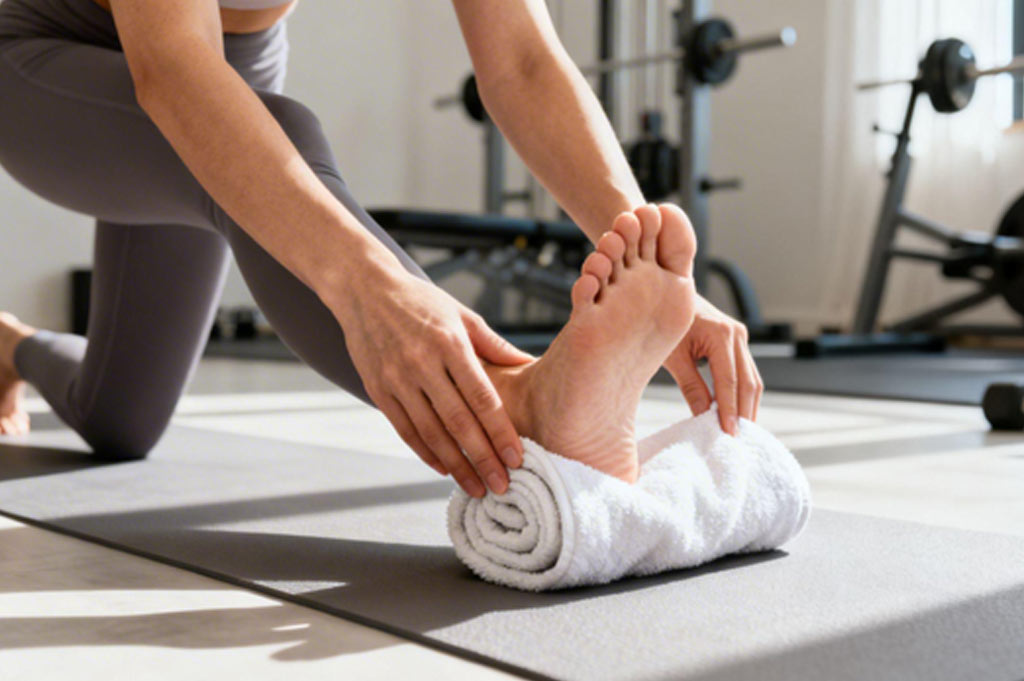
Once the pain is settling, strengthening matters. Immediate relief reduces irritation. Long-term relief depends on helping the foot handle load better.
Weak intrinsic foot muscles, tight calves, and poor control during push-off can all keep extra stress on the ball of the foot. Gentle exercises can improve how force moves through the foot.
Toe curls and towel work
A simple towel exercise helps wake up the small muscles that support the arch and forefoot.
Try this:
- Sit in a chair with a small towel on the floor.
- Place your foot flat on the towel.
- Curl your toes and pull the towel toward you.
- Relax and repeat slowly.
This is not about gripping as hard as possible. Smooth control is better than brute force. If the ball of the foot is still very tender, keep the effort light.
Marble pickups and foot control
Marble pickups train dexterity and foot awareness. They are especially useful for people whose feet feel weak, sloppy in motion, or unstable inside the shoe.
Place a few marbles on the floor and pick them up with your toes, one at a time. Drop them into a cup. Work slowly and stop if the exercise recreates the exact pain you are trying to calm.
Practical point: Strengthening should leave the foot feeling worked, not flared up.
Calf stretching matters more than often assumed
A tight calf can increase forefoot load during walking. When the ankle does not move well, the body often compensates by driving pressure forward.
Two stretches help:
- Wall calf stretch: Keep the back heel down and lean into the wall.
- Bent-knee calf stretch: Slightly bend the back knee to target the deeper calf and Achilles area.
Hold each stretch gently. The goal is steady lengthening, not bouncing.
Toe mobility and forefoot tolerance
Some people guard the forefoot so much that the toes stop moving well. Gentle toe motion can help restore a more natural push-off pattern.
You can try:
- Toe spreads: Separate the toes as much as you comfortably can.
- Gentle toe extension: Use your hand to lightly bend the toes upward, only within comfort.
- Short foot exercise: Draw the ball of the foot and heel toward each other slightly without curling the toes.
These drills are subtle. They look easy. Done correctly, they train the foot to support itself better.
A simple weekly rhythm
If you want a practical plan, keep it basic:
- On sore days: prioritize pressure relief, shoe support, and light mobility only.
- On improving days: add towel curls, calf stretches, and toe control work.
- Before activity: do a brief warm-up instead of stepping straight into a long walk or run.
- After activity: use cold if the forefoot feels irritated again.
What people often get wrong with exercise
The most common mistake is doing too much too soon. Another is choosing exercises that look athletic but do not address the reason the forefoot hurts.
If your ball of foot pain clearly worsens with every strengthening session, scale back. Exercises should support healing, not compete with it.
The Critical Role of Footwear and Custom Orthotics
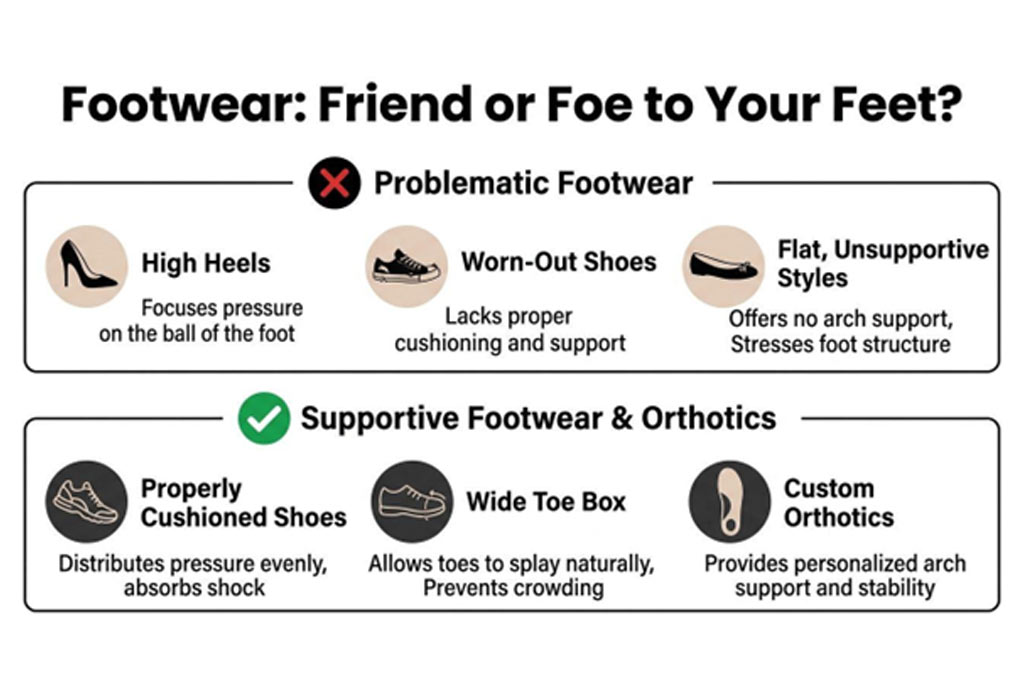
If you keep putting a painful foot into the same problematic shoe, relief usually stalls. Footwear is not a minor detail. It is often the main reason the forefoot stays irritated.
A good shoe reduces pressure. A poor one concentrates it.
What supportive shoes do
People hear “wear better shoes” all the time, but that advice is too vague to be useful. For ball of foot pain, the right shoe usually has:
- A wide toe box: The front of the shoe should let the toes spread naturally.
- Stable cushioning: Soft enough to absorb impact, stable enough not to collapse.
- Lower heel height: Less pitch means less force shoved onto the forefoot.
- A more structured sole: Better control of pressure during push-off.
Worn-out athletic shoes are a common culprit. So are stylish flats with no support and dress shoes that crowd the front of the foot.
Why off-the-shelf inserts sometimes help and sometimes do not
Store-bought inserts can be useful for mild cases. They are easy to find and sometimes reduce symptoms enough to get through a short flare. But they are not personalized. They cannot account for your gait, pressure pattern, toe mechanics, or the exact place the forefoot is overloaded.
That is where custom devices stand apart.
Custom orthotics with metatarsal pads achieve symptom resolution in 70-85% of cases. At Flagstaff Foot Doctors, Dr. Mark Anthony Rosales, DPM, uses 3D scanning for 98% fit accuracy, minimizing iterative visits for patients (The Foot Institute).
What custom orthotics do better
A well-made orthotic is not just an insert with more material. It is a device designed to change mechanics.
For forefoot pain, that may mean:
|
Orthotic feature |
Why it matters |
|
Metatarsal support |
Helps unload pressure from the painful area |
|
Arch support |
Improves force distribution through the foot |
|
Better rearfoot control |
Reduces faulty mechanics that overload the front of the foot |
|
More consistent fit |
Improves comfort and wear time |
Some people only need temporary offloading. Others need long-term biomechanical support because their foot structure keeps recreating the same problem.
High heels and trade-offs
High heels remain a real-world issue for many patients. Telling people to never wear them again is not always practical. The smarter approach is to reduce use during a flare, choose more forgiving styles when possible, and add support where it fits.
If you need a style-specific resource, this guide on arch supports in high heels is a useful starting point for understanding what can and cannot work in dress shoes.
When custom support makes sense
Consider a professional orthotic evaluation if any of these sound familiar:
- Pain returns every time activity increases
- You have tried shoe changes but still limp or compensate
- Over-the-counter pads help, but placement is inconsistent
- You need a more durable solution for work, hiking, or sport
Patients who want to learn more about options for custom foot orthotics in Flagstaff should look for a process that includes gait assessment, fit testing, and adjustments based on symptoms, not guesswork.
Clinical reality: Cushioning alone is not enough when faulty mechanics keep overloading the same spot.
When to See a Foot Doctor in Flagstaff for Your Pain
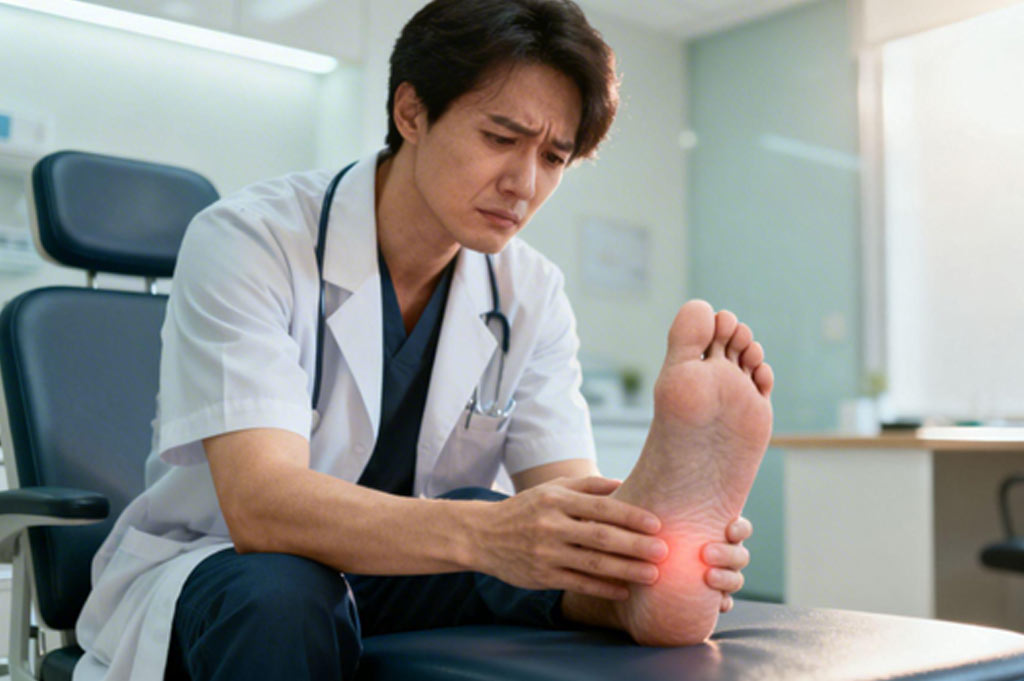
At-home care is reasonable for a mild flare. It is not the right plan forever. If the pain keeps returning, gets sharper, or changes the way you walk, it is time for a professional exam.
Signs you should not ignore
Ball of foot pain is sometimes simple metatarsalgia. Sometimes it is not. Nerve irritation, stress injury, joint inflammation, callus-related pressure, and toe deformity can all mimic a similar sore spot.
Seek podiatry care sooner if you notice:
- Pain that worsens instead of improving
- Numbness, tingling, or burning
- Swelling or bruising
- A limp or clear change in gait
- Pain after a specific injury
- Diabetes with any new foot pain or skin concern
People with diabetes should be especially careful. A pressure point that seems minor can turn into a larger problem if it is not identified early.
What a foot doctor looks for
A podiatrist does more than confirm that the forefoot hurts. The exam looks at where the pain is, what movement triggers it, how you walk, what your shoes are doing, and whether there are signs of a more specific diagnosis.
That matters because treatment changes depending on the source. A pressure problem, nerve problem, and stress injury do not get the same plan.
For readers wondering about timing, this page on when to call a foot doctor outlines situations where waiting is not a good idea.
Advanced non-surgical treatment options
When home care has not done enough, non-surgical podiatry treatments can calm pain and support healing much faster.
Steroid injections can deliver significant inflammation reduction and pain relief. Extracorporeal shock wave therapy (EPAT) stimulates healing, with patients often reporting notable improvements after a few weekly sessions and no downtime. These benefits have been observed in clinical practice.
Steroid injections can be useful when inflammation is intense and localized. They are not the answer for every patient, but in the right case they can settle a very painful flare quickly.
EPAT, also called shockwave therapy, is appealing for chronic cases because it works by stimulating healing rather than masking symptoms. Patients often like that it is non-surgical and does not require downtime.
Good treatment matches the diagnosis. If the pain is coming from overload alone, offloading may be enough. If deeper tissue or chronic inflammation is involved, advanced care may be the better move.
Special Considerations for Northern Arizona's Active Lifestyle
Northern Arizona creates a different kind of demand on feet. Trail surfaces are uneven. Elevation changes effort. Many residents alternate between road, rock, snow, and long standing days in the same week.
That matters for forefoot pain because the ball of the foot takes a lot of force during climbing, descending, and push-off on unstable ground.
Minimalist shoes are not automatically good or bad
Some athletes do well in minimalist footwear. Others flare up fast. The difference is often the transition.
For athletes on Northern Arizona trails, minimalist shoes can cut metatarsalgia by 28% long-term by strengthening foot muscles, but the transition carries risks. Advanced options like Swift Microwave Therapy, offered locally, can help heal related issues like stress fractures 40% faster (Foot and Ankle Center of Arizona).
The important part is not just the potential upside. It is the warning. A sudden switch to minimal cushioning on rocky terrain can overload the forefoot before the foot is strong enough to handle it.
Trail runners and hikers need a different lens
For local runners and hikers, I look at three practical questions:
|
Question |
Why it matters |
|
Is the shoe too thin for the terrain? |
Rockier ground can spike forefoot irritation |
|
Did training volume change quickly? |
Sudden load increases often trigger symptoms |
|
Is the pain broad or very specific? |
A pinpoint area raises more concern for injury |
Children and teens in sports also deserve extra caution. A growing foot does not always present pain the same way an adult foot does. If a young athlete keeps avoiding push-off, limps after practice, or points to one exact sore spot, that is worth evaluation.
The local takeaway
Active people in Flagstaff do best when they match footwear to terrain, build into changes gradually, and treat persistent forefoot pain early instead of trying to train through it.
Your Next Step to Pain-Free Mobility with Flagstaff Foot Doctors
Ball of foot pain usually improves when the plan is specific. Calm the flare. Reduce pressure. Strengthen the foot. Fix the shoe problem. Get expert care if symptoms persist or the diagnosis is unclear.
That approach works better than cycling through random pads, changing shoes every week, and hoping the pain settles on its own. It also helps prevent the common pattern where forefoot pain starts small, alters your gait, and turns into a bigger mobility problem.
At a podiatry visit, patients should expect a careful exam, a clear explanation of what is driving the pain, and a treatment plan that fits real life. That may include shoe guidance, metatarsal offloading, custom orthotics, activity modification, advanced therapy, or a combination of those options.
People in Flagstaff often want the same thing. They want to get back to walking comfortably, working without limping, and enjoying Northern Arizona without constantly thinking about every step. That goal is realistic when the source of the pain is identified early and treated properly.
If ball of foot pain is limiting your walks, workouts, workday, or time outdoors, schedule an evaluation with Flagstaff Foot Doctors. You can get a clear diagnosis, practical treatment options, and a plan built for your lifestyle in Flagstaff and the surrounding Northern Arizona communities.
