Achilles tendon injuries are common among soccer players due to repetitive running, sudden acceleration, and frequent jumping. Achilles tendinopathies refer to chronic irritation or degeneration of the tendon, often resulting in pain, swelling, and reduced performance. Mid portion Achilles tendinopathy affects the middle section of the tendon and typically develops from overuse, while insertion Achilles tendinopathy occurs where the tendon attaches to the heel bone and may involve inflammation or bone spurs. Symptoms may include stiffness, tenderness, swelling, and difficulty with explosive movements. A podiatrist can evaluate the extent of injury, provide targeted treatment, including orthotics, activity modification, and recommend surgical options, if necessary. If you have sustained an Achilles tendon injury, it is suggested that you consult a podiatrist who can accurately diagnose the problem, and offer effective treatment solutions.
Achilles tendon injuries need immediate attention to avoid future complications. If you have any concerns, contact Anthony Rosales, DPM of Flagstaff Foot Doctors. Our practitioner can provide the care you need to keep you pain-free and on your feet.
What Is the Achilles Tendon?
The Achilles tendon is a tendon that connects the lower leg muscles and calf to the heel of the foot. It is the strongest tendon in the human body and is essential for making movement possible. Because this tendon is such an integral part of the body, any injuries to it can create immense difficulties and should immediately be presented to a doctor.
What Are the Symptoms of an Achilles Tendon Injury?
There are various types of injuries that can affect the Achilles tendon. The two most common injuries are Achilles tendinitis and ruptures of the tendon.
Achilles Tendinitis Symptoms
Inflammation
Dull to severe pain
Increased blood flow to the tendon
Thickening of the tendon
Rupture Symptoms
Extreme pain and swelling in the foot
Total immobility
Treatment and Prevention
Achilles tendon injuries are diagnosed by a thorough physical evaluation, which can include an MRI. Treatment involves rest, physical therapy, and in some cases, surgery. However, various preventative measures can be taken to avoid these injuries, such as:
Thorough stretching of the tendon before and after exercise
Strengthening exercises like calf raises, squats, leg curls, leg extensions, leg raises, lunges, and leg presses
If you have any questions please feel free to contact our office located in Flagstaff, AZ. We offer the newest diagnostic tools and technology to treat your foot and ankle needs.
How to Relieve Ball of Foot Pain: Effective Solutions
A lot of people look up how to relieve ball of foot pain when a normal day suddenly becomes awkward. You stand up from the couch, head out for a walk, or start down a trail, and that sharp soreness under the toes changes how you move.
In Flagstaff, that problem shows up fast. One long shift on hard floors, one run on uneven ground, or one weekend in shoes that looked fine but did not support your forefoot can leave the ball of the foot tender, swollen, or burning. The good news is that many cases respond well to the right combination of pressure relief, shoe changes, targeted support, and timely podiatry care.
That Sharp Pain Under Your Toes A Familiar Problem in Flagstaff
One of the most common stories behind forefoot pain is simple. A person feels fine at the start of the day, then notices a hot, bruised, or burning feeling under the toes by afternoon. Walking downtown becomes irritating. Hiking plans get cut short. Even standing in the kitchen starts to feel like too much.
That pain often has a name: metatarsalgia. This term refers to pain in the ball of the foot, usually where pressure builds beneath the metatarsal heads.
For many people, the discomfort is not dramatic at first. It may feel like stepping on a pebble, a sore spot in a running shoe, or tenderness that appears only when pushing off. Then it lingers. Then it changes your gait. Then the calf, ankle, or opposite foot starts compensating.
The problem is common. Seventy-five percent of Americans experience foot pain at some point in their lives, with ball of foot pain, known as metatarsalgia, being a common form caused by high-impact activities or ill-fitting shoes that inflame pressure points in the forefoot (PPS Chicago).
Why it flares up in Northern Arizona
Flagstaff residents put their feet to work. Trails, hills, long days on uneven ground, winter boots, work shoes, and active weekends all load the forefoot in different ways. Even people who are not runners can develop ball of foot pain from repeated pressure and poor shoe mechanics.
A few patterns show up often:
Activity overload: A jump in walking, hiking, court sports, or running can irritate the forefoot.
Shoe pressure: Narrow toe boxes, worn-out soles, and high heels push load toward the front of the foot.
Hard surfaces: Standing and walking on firm floors can make a sensitive metatarsal area feel worse.
Key takeaway: Ball of foot pain is often a pressure problem before it becomes a bigger injury problem.
What relief usually requires
The fastest path to improvement is rarely one trick. Massage alone usually does not fix it. Ignoring it rarely helps. Relief usually comes from reducing pressure, calming irritation, supporting the foot better, and addressing the reason the forefoot is overloaded in the first place.
Immediate At-Home Relief for Ball of Foot Pain
When the ball of your foot is flared up, the first job is to calm the tissue down. Do that well, and walking becomes easier. Skip that step, and even good shoes or exercises may not help much because the area is still irritated.
Start with RICE done correctly
A strong first response is the RICE method. For ball of foot pain, the details matter. Key relief protocols emphasize the RICE method plus targeted interventions: ice for 15-20 minutes, 3-4 times daily, reducing inflammation via vasoconstriction; metatarsal pads under metatarsal heads to offload pressure, validated by clinical research (Hinge Health).
Use it like this:
Rest the forefoot Stop the activity that keeps recreating the pain. If running hurts, switch to biking or swimming for now. If long walks on pavement trigger symptoms, shorten them for several days.
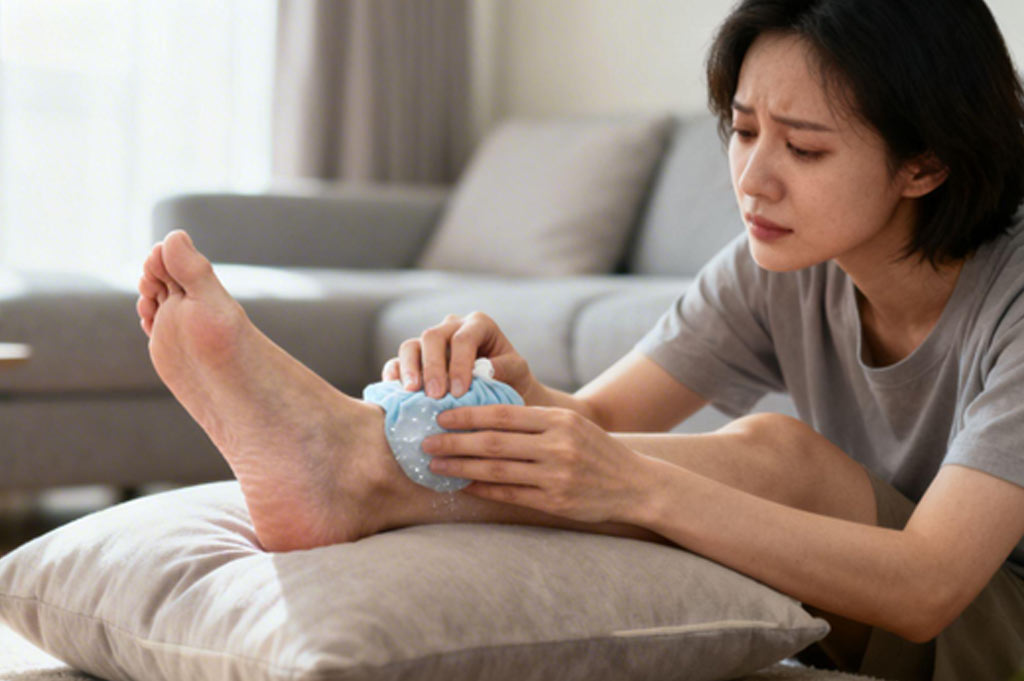
Ice with a barrier Wrap the cold pack in a thin cloth. Place it under the sore area for 15 to 20 minutes, then remove it. Repeat 3 to 4 times daily if the area is warm, swollen, or throbbing.
Compression if swelling is present A light wrap can help if the forefoot feels puffy, but do not squeeze the toes. Compression should feel supportive, not tight.
Elevation when you are off your feet Prop the foot up after activity. The goal is to reduce irritation and swelling, especially after long periods of standing.
Small changes that reduce pressure fast
Many individuals find improvement when they also change how the foot is loaded during the day.
Wear supportive shoes indoors: Bare feet on hard floors often aggravate the area.
Pause high heels and thin flats: These keep pressure on the front of the foot.
Use ibuprofen if appropriate for you: Anti-inflammatory medication can help control discomfort. Follow label directions and your physician’s guidance.
Metatarsal pads can help quickly
A metatarsal pad is not placed directly under the painful spot. It usually works best when positioned just behind the sore area, helping spread pressure away from the ball of the foot as you walk.
If you put it right on the tender spot, it can make things worse. If you are trying an over-the-counter option at home, choose a soft pad and test placement in a supportive shoe, not in a flimsy flat.
A good way to think about it is simple. You are not trying to cushion the bruise. You are trying to shift the load away from it.
Heat, sauna, and when they fit
People often ask whether heat helps. Early in a flare, cold usually makes more sense because the tissue is irritated. Heat can feel good later, especially when stiffness is part of the problem.
If you are exploring broader recovery strategies, this guide on sauna for pain relief gives helpful general context on when heat may support comfort. For an actively inflamed ball of foot, I still prefer cold first.
Here is a short visual guide that can help you think through foot pain recovery at home:
Repeats the same pressure cycle that caused the pain
Barefoot recovery on tile or wood
Keeps the forefoot exposed to hard surfaces
Using very soft, unsupportive slippers
Feels cushioned but may not control load well
Stretching aggressively on day one
Can irritate tissue that needs unloading first
Tip: If the pain is sharpest during push-off, focus first on reducing forefoot pressure, not on forcing more movement.
Stretches and Exercises to Build a Stronger Foundation
Once the pain is settling, strengthening matters. Immediate relief reduces irritation. Long-term relief depends on helping the foot handle load better.
Weak intrinsic foot muscles, tight calves, and poor control during push-off can all keep extra stress on the ball of the foot. Gentle exercises can improve how force moves through the foot.
Toe curls and towel work
A simple towel exercise helps wake up the small muscles that support the arch and forefoot.
Try this:
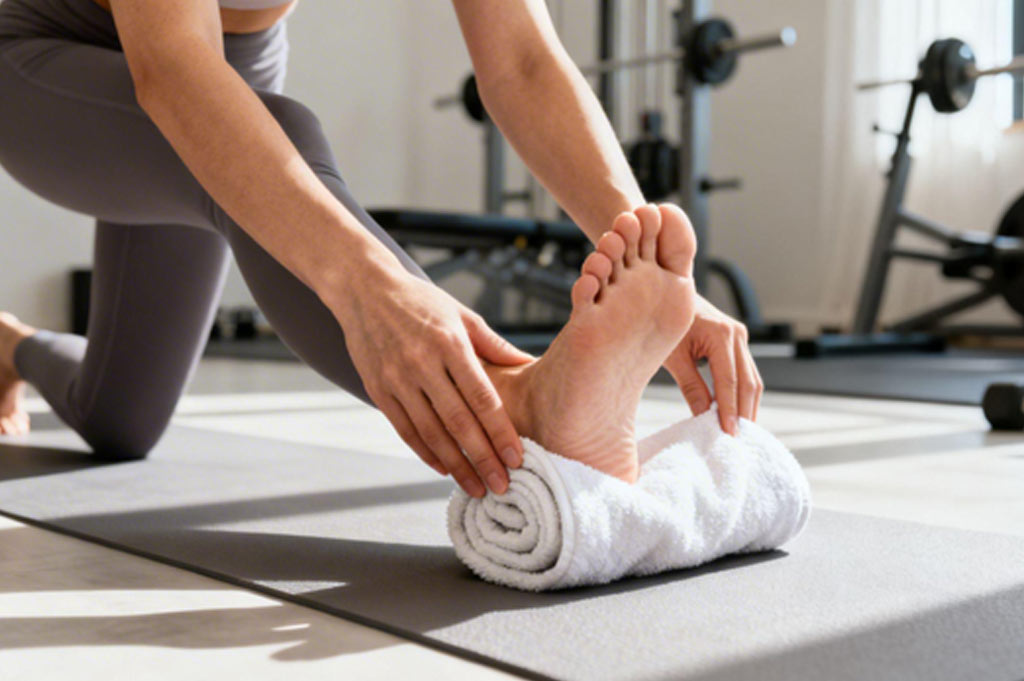
Sit in a chair with a small towel on the floor.
Place your foot flat on the towel.
Curl your toes and pull the towel toward you.
Relax and repeat slowly.
This is not about gripping as hard as possible. Smooth control is better than brute force. If the ball of the foot is still very tender, keep the effort light.
Marble pickups and foot control
Marble pickups train dexterity and foot awareness. They are especially useful for people whose feet feel weak, sloppy in motion, or unstable inside the shoe.
Place a few marbles on the floor and pick them up with your toes, one at a time. Drop them into a cup. Work slowly and stop if the exercise recreates the exact pain you are trying to calm.
Practical point: Strengthening should leave the foot feeling worked, not flared up.
Calf stretching matters more than often assumed
A tight calf can increase forefoot load during walking. When the ankle does not move well, the body often compensates by driving pressure forward.
Two stretches help:
Wall calf stretch: Keep the back heel down and lean into the wall.
Bent-knee calf stretch: Slightly bend the back knee to target the deeper calf and Achilles area.
Hold each stretch gently. The goal is steady lengthening, not bouncing.
Toe mobility and forefoot tolerance
Some people guard the forefoot so much that the toes stop moving well. Gentle toe motion can help restore a more natural push-off pattern.
You can try:
Toe spreads: Separate the toes as much as you comfortably can.
Gentle toe extension: Use your hand to lightly bend the toes upward, only within comfort.
Short foot exercise: Draw the ball of the foot and heel toward each other slightly without curling the toes.
These drills are subtle. They look easy. Done correctly, they train the foot to support itself better.
A simple weekly rhythm
If you want a practical plan, keep it basic:
On sore days: prioritize pressure relief, shoe support, and light mobility only.
On improving days: add towel curls, calf stretches, and toe control work.
Before activity: do a brief warm-up instead of stepping straight into a long walk or run.
After activity: use cold if the forefoot feels irritated again.
What people often get wrong with exercise
The most common mistake is doing too much too soon. Another is choosing exercises that look athletic but do not address the reason the forefoot hurts.
If your ball of foot pain clearly worsens with every strengthening session, scale back. Exercises should support healing, not compete with it.
The Critical Role of Footwear and Custom Orthotics
If you keep putting a painful foot into the same problematic shoe, relief usually stalls. Footwear is not a minor detail. It is often the main reason the forefoot stays irritated.
A good shoe reduces pressure. A poor one concentrates it.
What supportive shoes do
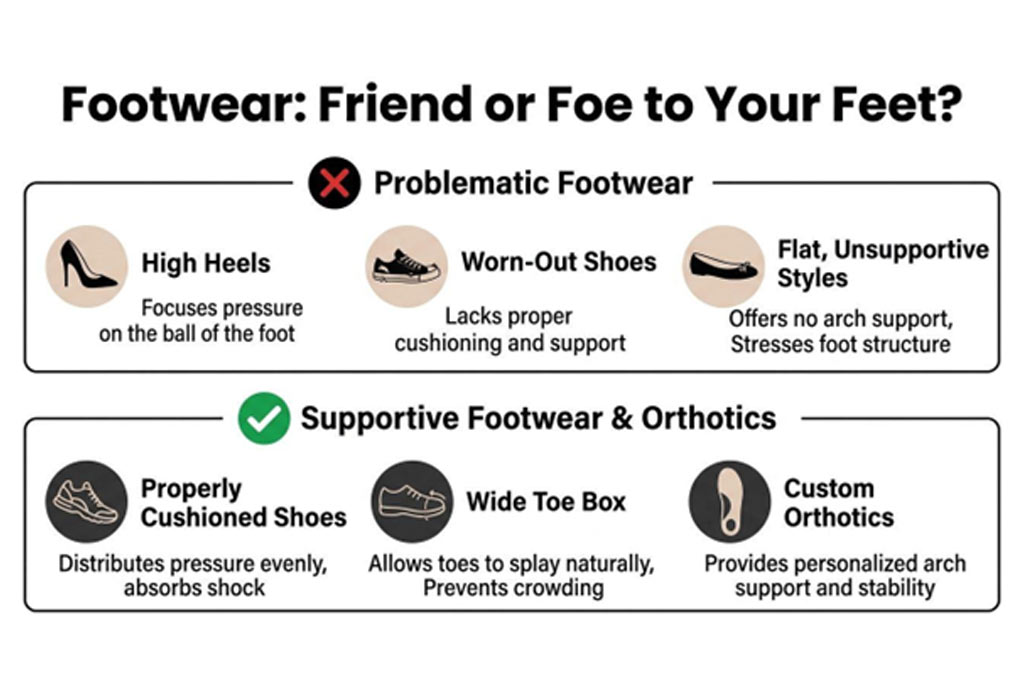
People hear “wear better shoes” all the time, but that advice is too vague to be useful. For ball of foot pain, the right shoe usually has:
A wide toe box: The front of the shoe should let the toes spread naturally.
Stable cushioning: Soft enough to absorb impact, stable enough not to collapse.
Lower heel height: Less pitch means less force shoved onto the forefoot.
A more structured sole: Better control of pressure during push-off.
Worn-out athletic shoes are a common culprit. So are stylish flats with no support and dress shoes that crowd the front of the foot.
Why off-the-shelf inserts sometimes help and sometimes do not
Store-bought inserts can be useful for mild cases. They are easy to find and sometimes reduce symptoms enough to get through a short flare. But they are not personalized. They cannot account for your gait, pressure pattern, toe mechanics, or the exact place the forefoot is overloaded.
That is where custom devices stand apart.
Custom orthotics with metatarsal pads achieve symptom resolution in 70-85% of cases. At Flagstaff Foot Doctors, Dr. Mark Anthony Rosales, DPM, uses 3D scanning for 98% fit accuracy, minimizing iterative visits for patients (The Foot Institute).
What custom orthotics do better
A well-made orthotic is not just an insert with more material. It is a device designed to change mechanics.
For forefoot pain, that may mean:
Orthotic feature
Why it matters
Metatarsal support
Helps unload pressure from the painful area
Arch support
Improves force distribution through the foot
Better rearfoot control
Reduces faulty mechanics that overload the front of the foot
More consistent fit
Improves comfort and wear time
Some people only need temporary offloading. Others need long-term biomechanical support because their foot structure keeps recreating the same problem.
High heels and trade-offs
High heels remain a real-world issue for many patients. Telling people to never wear them again is not always practical. The smarter approach is to reduce use during a flare, choose more forgiving styles when possible, and add support where it fits.
If you need a style-specific resource, this guide on arch supports in high heels is a useful starting point for understanding what can and cannot work in dress shoes.
When custom support makes sense
Consider a professional orthotic evaluation if any of these sound familiar:
Pain returns every time activity increases
You have tried shoe changes but still limp or compensate
Over-the-counter pads help, but placement is inconsistent
You need a more durable solution for work, hiking, or sport
Patients who want to learn more about options for custom foot orthotics in Flagstaff should look for a process that includes gait assessment, fit testing, and adjustments based on symptoms, not guesswork.
Clinical reality: Cushioning alone is not enough when faulty mechanics keep overloading the same spot.
When to See a Foot Doctor in Flagstaff for Your Pain
At-home care is reasonable for a mild flare. It is not the right plan forever. If the pain keeps returning, gets sharper, or changes the way you walk, it is time for a professional exam.
Signs you should not ignore
Ball of foot pain is sometimes simple metatarsalgia. Sometimes it is not. Nerve irritation, stress injury, joint inflammation, callus-related pressure, and toe deformity can all mimic a similar sore spot.
Seek podiatry care sooner if you notice:
Pain that worsens instead of improving
Numbness, tingling, or burning
Swelling or bruising
A limp or clear change in gait
Pain after a specific injury
Diabetes with any new foot pain or skin concern
People with diabetes should be especially careful. A pressure point that seems minor can turn into a larger problem if it is not identified early.
What a foot doctor looks for
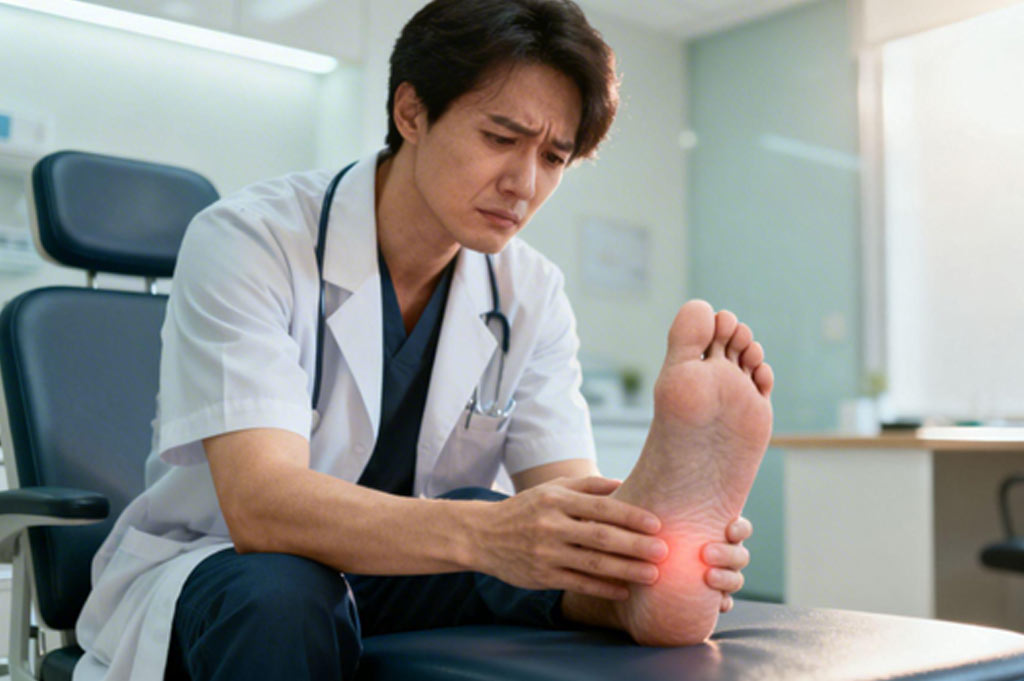
A podiatrist does more than confirm that the forefoot hurts. The exam looks at where the pain is, what movement triggers it, how you walk, what your shoes are doing, and whether there are signs of a more specific diagnosis.
That matters because treatment changes depending on the source. A pressure problem, nerve problem, and stress injury do not get the same plan.
For readers wondering about timing, this page on when to call a foot doctor outlines situations where waiting is not a good idea.
Advanced non-surgical treatment options
When home care has not done enough, non-surgical podiatry treatments can calm pain and support healing much faster.
Steroid injections can deliver significant inflammation reduction and pain relief. Extracorporeal shock wave therapy (EPAT) stimulates healing, with patients often reporting notable improvements after a few weekly sessions and no downtime. These benefits have been observed in clinical practice.
Steroid injections can be useful when inflammation is intense and localized. They are not the answer for every patient, but in the right case they can settle a very painful flare quickly.
EPAT, also called shockwave therapy, is appealing for chronic cases because it works by stimulating healing rather than masking symptoms. Patients often like that it is non-surgical and does not require downtime.
Good treatment matches the diagnosis. If the pain is coming from overload alone, offloading may be enough. If deeper tissue or chronic inflammation is involved, advanced care may be the better move.
Special Considerations for Northern Arizona's Active Lifestyle
Northern Arizona creates a different kind of demand on feet. Trail surfaces are uneven. Elevation changes effort. Many residents alternate between road, rock, snow, and long standing days in the same week.
That matters for forefoot pain because the ball of the foot takes a lot of force during climbing, descending, and push-off on unstable ground.
Minimalist shoes are not automatically good or bad
Some athletes do well in minimalist footwear. Others flare up fast. The difference is often the transition.
For athletes on Northern Arizona trails, minimalist shoes can cut metatarsalgia by 28% long-term by strengthening foot muscles, but the transition carries risks. Advanced options like Swift Microwave Therapy, offered locally, can help heal related issues like stress fractures 40% faster (Foot and Ankle Center of Arizona).
The important part is not just the potential upside. It is the warning. A sudden switch to minimal cushioning on rocky terrain can overload the forefoot before the foot is strong enough to handle it.
Trail runners and hikers need a different lens
For local runners and hikers, I look at three practical questions:
Question
Why it matters
Is the shoe too thin for the terrain?
Rockier ground can spike forefoot irritation
Did training volume change quickly?
Sudden load increases often trigger symptoms
Is the pain broad or very specific?
A pinpoint area raises more concern for injury
Children and teens in sports also deserve extra caution. A growing foot does not always present pain the same way an adult foot does. If a young athlete keeps avoiding push-off, limps after practice, or points to one exact sore spot, that is worth evaluation.
The local takeaway
Active people in Flagstaff do best when they match footwear to terrain, build into changes gradually, and treat persistent forefoot pain early instead of trying to train through it.
Your Next Step to Pain-Free Mobility with Flagstaff Foot Doctors
Ball of foot pain usually improves when the plan is specific. Calm the flare. Reduce pressure. Strengthen the foot. Fix the shoe problem. Get expert care if symptoms persist or the diagnosis is unclear.
That approach works better than cycling through random pads, changing shoes every week, and hoping the pain settles on its own. It also helps prevent the common pattern where forefoot pain starts small, alters your gait, and turns into a bigger mobility problem.
At a podiatry visit, patients should expect a careful exam, a clear explanation of what is driving the pain, and a treatment plan that fits real life. That may include shoe guidance, metatarsal offloading, custom orthotics, activity modification, advanced therapy, or a combination of those options.
People in Flagstaff often want the same thing. They want to get back to walking comfortably, working without limping, and enjoying Northern Arizona without constantly thinking about every step. That goal is realistic when the source of the pain is identified early and treated properly.
If ball of foot pain is limiting your walks, workouts, workday, or time outdoors, schedule an evaluation with Flagstaff Foot Doctors. You can get a clear diagnosis, practical treatment options, and a plan built for your lifestyle in Flagstaff and the surrounding Northern Arizona communities.
Diabetic foot ulcers are open wounds that can form when long-term diabetes damages nerves or reduces circulation in the lower extremities. These wounds are often grouped into three categories based on the main cause. Purely neuropathic ulcers develop when nerve damage reduces feeling in the foot. Because sensation is limited, a person may not notice pressure, rubbing, or small injuries, allowing the skin to break down over time. Purely ischemic ulcers are related to poor blood flow. When circulation to the feet is reduced, the skin and tissues receive less oxygen and nutrients, which makes healing slow and increases the risk of tissue damage. Mixed neuroischemic ulcers involve both nerve damage and poor circulation. This combination can make injuries harder to detect and more difficult for the body to repair. If you have diabetes and a sore on the foot does not heal normally or becomes painful or swollen, it is suggested that you promptly see a podiatrist for a proper diagnosis and appropriate treatment.
Diabetic foot care is important in preventing foot ailments such as ulcers. If you are suffering from diabetes or have any other concerns about your feet, contact Anthony Rosales, DPM from Flagstaff Foot Doctors. Our practitioner can provide the care you need to keep you pain-free and on your feet.
Diabetic Foot Care
Diabetes affects millions of people every year. The condition can damage blood vessels in many parts of the body, especially the feet. Because of this, taking care of your feet is essential if you have diabetes, and having a podiatrist help monitor your foot health is highly recommended.
The Importance of Caring for Your Feet
Routinely inspect your feet for bruises or sores.
Wear socks that fit your feet comfortably.
Wear comfortable shoes that provide adequate support.
Patients with diabetes should have their doctor monitor their blood levels, as blood sugar levels play such a huge role in diabetic care. Monitoring these levels on a regular basis is highly advised.
It is always best to inform your healthcare professional of any concerns you may have regarding your feet, especially for diabetic patients. Early treatment and routine foot examinations are keys to maintaining proper health, especially because severe complications can arise if proper treatment is not applied.
If you have any questions, please feel free to contact our office located in Flagstaff, AZ. We offer the newest diagnostic and treatment technologies for all your foot care needs.
A bunion can make ordinary moments feel bigger than they should. You notice it when you lace up your walking shoes, when you stand through a work shift, or when a short stroll around Flagstaff starts to feel like a chore instead of a break.
Many people assume a bunion automatically means surgery. In practice, that is not where treatment starts. Conservative care is usually the first step, and for many patients it is the approach that brings the most practical relief.
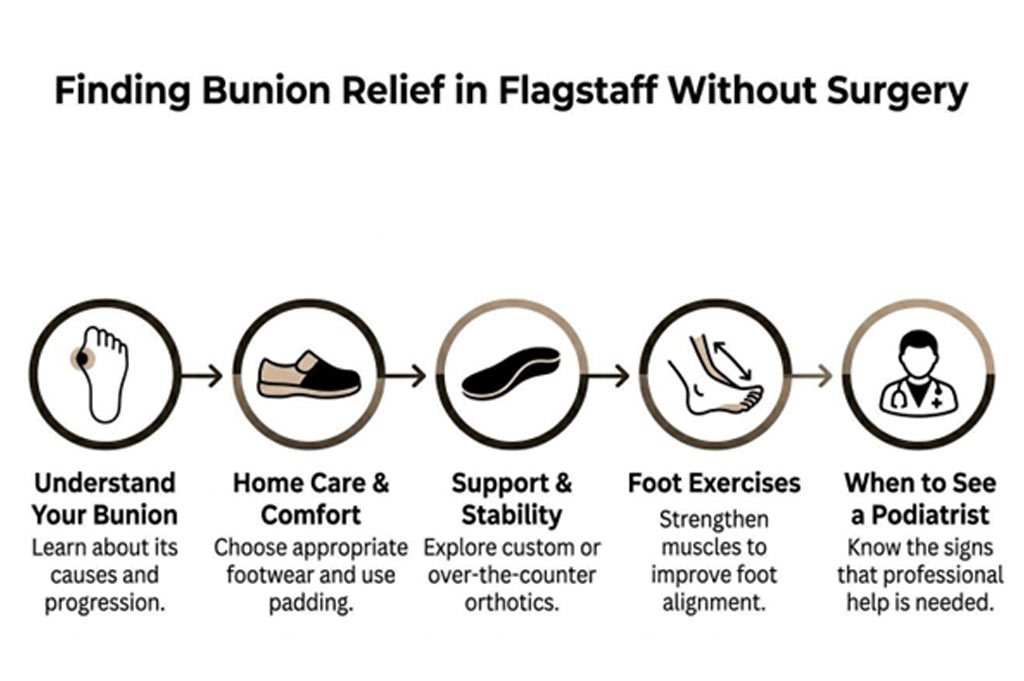
Finding Bunion Relief in Flagstaff Without Surgery
Northern Arizona asks a lot from your feet. Uneven trails, long days standing, winter boots, running shoes, and everyday walking all put repeated pressure on the front of the foot. When the big toe joint is already irritated, that pressure can turn a mild bump into a daily source of pain.
A bunion is more than a bump. It is a change in alignment at the base of the big toe that can lead to rubbing, swelling, stiffness, and trouble finding shoes that fit comfortably. The earlier you respond to it, the more options you usually have.
Start early and stay consistent
Non-surgical care is not a backup plan. It is the first-line treatment podiatrists use for bunion pain. HealthPartners notes that nonsurgical treatment is the initial step, and that early care with proper footwear, padding, ice, and anti-inflammatories helps many people manage symptoms effectively. That same summary reports 70 to 80% of patients achieve meaningful relief with conservative treatment (HealthPartners on bunion treatment without surgery).
That matters for active adults in Flagstaff. If you can lower pressure on the joint, calm inflammation, and support the foot more effectively, you may keep hiking, walking, working, and training with much less discomfort.
What non-surgical care does
The most useful way to think about conservative bunion treatment is in three parts:
Reduce irritation now so the joint is less painful day to day.
Improve support and mechanics so each step places less stress on the bunion.
Slow progression over time so the problem does not become harder to manage.
Some treatments work best for comfort. Others work best for control. The strongest plans use both.
Key takeaway: Surgery is not the starting point for most bunions. Early, steady care often gives patients the best chance to stay comfortable and active without an operation.
What tends to work and what tends not to
Helpful treatment is usually simple, specific, and repeatable. Shoe changes, padding, ice after activity, targeted exercises, orthotics, and guided care from a podiatrist all fit that pattern.
What usually does not work is relying on one quick fix. A random insole, a tight shoe worn “just for a few hours,” or occasional stretching without changing footwear rarely solves the problem by itself. Bunions respond better when pressure relief, support, and muscle work happen together.
Your First Steps to Soothe Bunion Pain at Home
If your bunion flares up after a long day, home care should lower friction and settle inflammation. These first steps are practical. They do not correct the bone position, but they often make daily life much easier.
Choose shoes that stop pressing on the joint
The biggest mistake I see is focusing only on shoe size. A longer shoe is not enough if the front of the shoe still squeezes the big toe joint from the side.
Look for these features:
Wide toe box: Your toes should spread naturally instead of being pinched together.
Soft upper material: Flexible material reduces rubbing over the bunion.
Stable sole: A more stable base can reduce strain with walking.
Lower pressure over the forefoot: Avoid narrow dress shoes and pointed styles that force the toe inward.
A good test is simple. If you can feel the shoe touching the bunion while standing still, it will usually feel worse once you start walking.
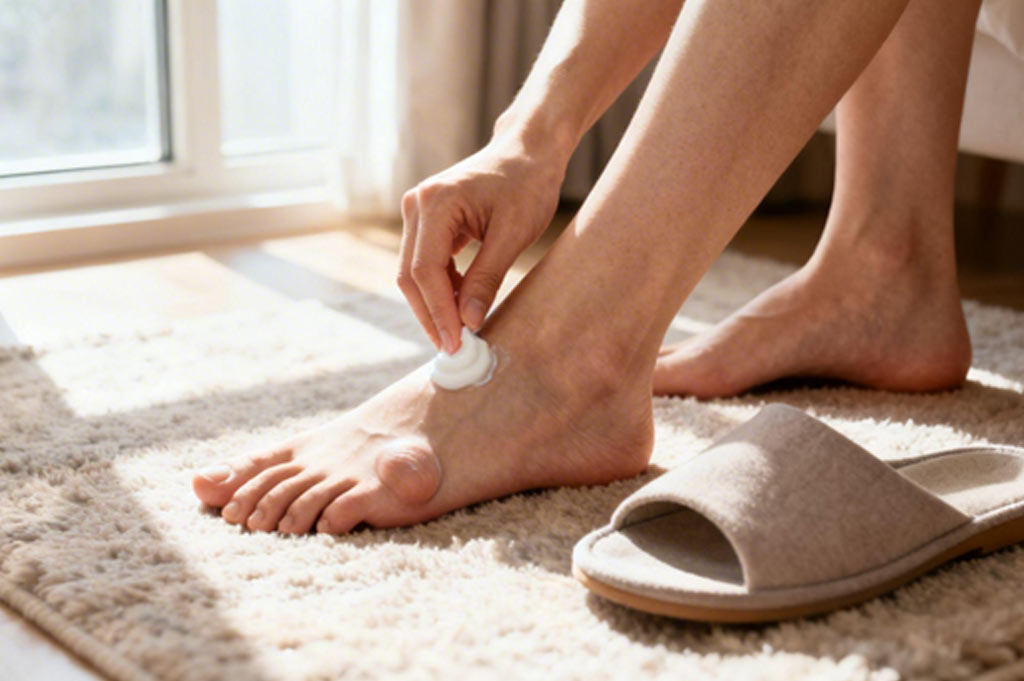
Use padding to reduce rubbing
Padding does not realign the joint, but it can protect the irritated area from friction. That matters if your pain comes from the shoe rubbing over the bump.
A few practical options:
Gel bunion pads: Often helpful inside everyday shoes because they cushion the bunion directly.
Moleskin-style padding: Useful when you need a thinner barrier in a snugger shoe.
Toe spacers: Sometimes helpful during light activity or at home if they reduce crowding between the first and second toes.
Padding should feel protective, not tight. If it makes the shoe feel more crowded, it may increase pressure instead of reducing it.
Use cold when the joint is swollen
Ice is most useful after activity, prolonged standing, or a noticeable flare. Mayo Clinic guidance summarized in the verified material recommends applying an ice pack for 15 to 20 minutes, wrapped in a towel, to ease soreness and swelling.
A simple routine works well:
After activity: Apply wrapped ice to the bunion.
While resting: Elevate the foot if swelling is noticeable.
Repeat as needed: Especially on high-demand days.
Use warmth for muscle soreness, not active swelling
Patients often ask whether heat or ice is better. The answer depends on what you are feeling.
Symptom
Better choice
Why
Swollen, hot, irritated joint
Ice
Helps calm inflammation
Achy, stiff foot muscles
Heat
Helps loosen tight soft tissue
Long day on your feet with puffiness
Ice plus elevation
Reduces post-activity irritation
Heat can feel soothing before gentle stretching. Ice usually makes more sense after a flare.
Practical tip: If the bunion looks puffy and feels tender to touch, start with cold. If the foot feels stiff and sore without obvious swelling, gentle warmth may feel better.
Use medication carefully for short-term relief
Over-the-counter anti-inflammatory medication can help calm a painful flare. The verified guidance from Cleveland Clinic notes that oral or topical NSAIDs can reduce pain and swelling, with use limited to under 10 days without provider consultation as summarized by HealthPartners in the source cited earlier.
Mayo Clinic also lists common pain-relief options such as ibuprofen, naproxen, and acetaminophen in its bunion guidance as summarized in that same verified source. These medications can be useful, but they should not become the entire treatment plan.
If pain keeps returning as soon as the medication wears off, the underlying mechanics still need attention.
A short home checklist
Before you move on to braces, orthotics, or office treatment, make sure you are doing the basics well:
Wear the right shoes most days: Not only when the foot hurts.
Protect the bump: Use padding if friction is the main trigger.
Cool the joint after load: Especially after standing, hiking, or exercise.
Avoid “toughing it out” in narrow shoes: That usually restarts the cycle.
Notice your pattern: If pain is becoming more frequent, it is time to move beyond home care alone.
These small changes often create immediate breathing room. The next step is dealing with the mechanical forces that keep pushing the bunion in the wrong direction.
How Custom Orthotics and Splints Slow Bunion Progression
Home relief helps symptoms. Mechanical support helps control the problem that keeps feeding those symptoms.
A bunion often worsens because the foot does not load evenly. If the front of the foot rolls in a way that increases pressure at the big toe joint, each step can irritate the bunion and reinforce the deforming pattern. That is why a flat drugstore insert and a prescription orthotic are not the same thing.
Why biomechanics matter
The bunion itself is visible, but the force causing it is often less obvious. Excess motion through the foot, arch instability, and poor pressure distribution can increase stress on the first ray, the part of the foot connected to the big toe joint.
That is where custom orthotics become useful. Their job is not to add softness. Their primary value is to change how pressure moves through the foot.
According to verified clinical data, a podiatrist-led protocol using custom rigid orthotics with medial forefoot posting can offload 20 to 30% of pressure from the first ray, and when paired with nightly splinting for 8 to 12 weeks, this approach can lead to 68 to 85% pain reduction in early-stage bunions (clinical summary on custom orthotics and bunion splints).
The difference between generic inserts and custom orthotics
This distinction matters.
Option
What it can do
What it usually cannot do
Over-the-counter insole
Add cushioning and basic support
Match your exact pressure pattern or alignment needs
Custom orthotic
Redistribute pressure, improve support, and guide loading more precisely
Instantly reverse a bunion deformity
Patients sometimes expect orthotics to “push the bunion back.” That is not the right expectation. Orthotics help by making walking less irritating and more stable. In the right patient, that can slow progression and make everyday activity much more comfortable.
One option for patients exploring custom orthotics for foot support and alignment is a podiatric evaluation that looks at gait, pressure, foot shape, and the way the big toe joint functions under load.
How splints fit into treatment
Splints and toe separators play a different role than orthotics. They are most useful when you want gentle positional support, especially at night or during low-demand periods.
They can help by:
Reducing crowding: Keeping the big toe from pressing tightly into the second toe.
Providing a stretch: Night splints can place gentle corrective tension on the joint.
Supporting consistency: They work best when used regularly, not occasionally.
The key trade-off is practicality. Splints are not ideal inside every daytime shoe, and some people find them cumbersome. Night use is often more realistic.
What works best in real life
The strongest conservative plans usually combine comfort and control:
better shoes
pressure relief
a custom orthotic when mechanics need correction
a splint or spacer when toe alignment support is useful
exercises to strengthen the foot
Clinical reality: Orthotics and splints do different jobs. Orthotics manage load when you walk. Splints provide positional support when you are not asking the foot to perform at full demand.
What usually fails is relying on a single device while ignoring the rest of the picture. A well-made orthotic inside a narrow shoe still leaves the bunion under pressure. A night splint used inconsistently may not do much. The plan has to fit your daily life, or it will not last.
Therapeutic Exercises and Stretches to Manage Bunions
Support from the outside matters. Strength from the foot itself matters too.
Many people with bunions have weakness in the small muscles that help stabilize the arch and guide toe function. Exercise will not erase the bump, but it can improve control, mobility, and comfort. For mild to moderate bunions, that can make a real difference in how the foot feels during daily activity.
Verified clinical guidance describes a 12-week physical therapy protocol using intrinsic foot strengthening such as towel scrunches and marble pickups. That protocol can produce 70 to 90% improvement in function for mild to moderate bunions, and contrast hydrotherapy may reduce edema by up to 40% (MovementX guide to treating bunions without surgery).
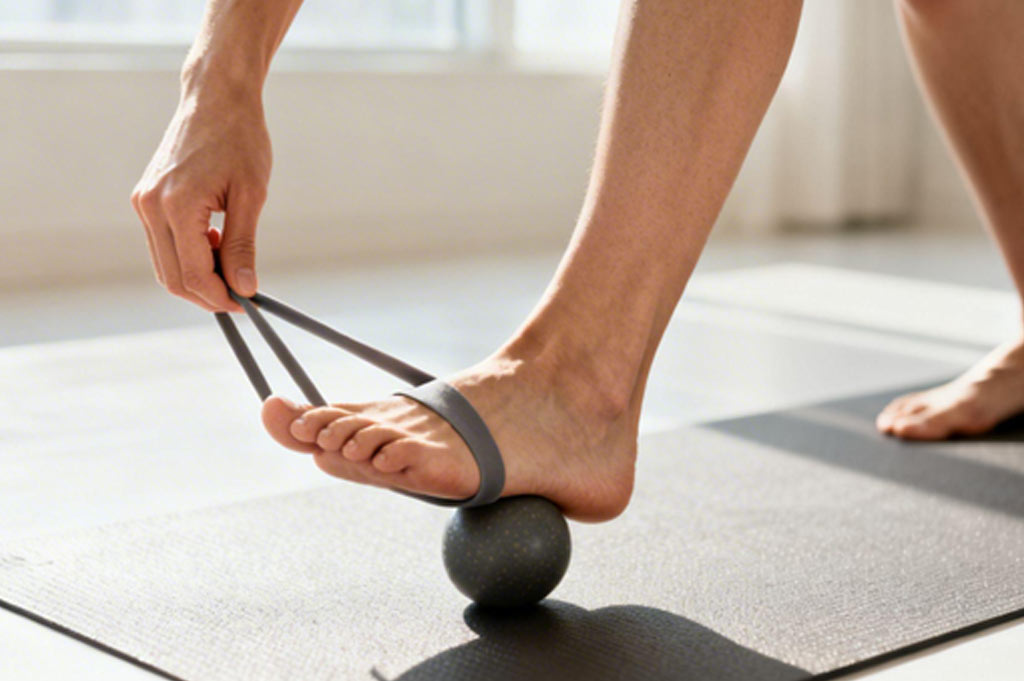
Exercises that help the foot do its job better
These are useful starting points because they target control, not just flexibility.
Towel scrunches
Place a small towel flat on the floor and pull it toward you with your toes.
Why it helps: this exercise wakes up the small muscles along the bottom of the foot that support the arch and assist toe control.
Marble pickups
Pick up small objects with your toes and place them into a cup or bowl.
Why it helps: this adds precision and coordination. It is a simple way to challenge the foot muscles without high load.
Toe spreading
Try to gently spread the toes apart while keeping the ball of the foot and heel grounded.
Why it helps: crowding at the forefoot often goes hand in hand with poor toe control. Toe spreading helps restore active use of muscles that support alignment.
Mobility matters too
A painful bunion often becomes stiff. When the big toe stops moving well, walking becomes less efficient and the surrounding tissues can get more irritated.
Try these gently:
Big toe stretch: Use your hands to guide the big toe toward a more neutral position without forcing it.
Calf stretch at the wall: Tight calves can increase strain through the foot during walking.
Heel raises: Performed with control, these help train the foot and ankle to load more efficiently.
If an exercise causes sharp pain, stop. Mild muscular effort is fine. Joint irritation is not the goal.
Tip for consistency: Tie exercises to something you already do every day, such as brushing your teeth, watching the evening news, or cooling down after a walk.
Use contrast therapy after activity
When the foot feels swollen and tired after standing, walking, or hiking, contrast hydrotherapy can be useful. The verified protocol alternates a warm soak with brief cold exposure to calm irritation while relaxing the surrounding tissues.
Patients often find this helpful after activity because it addresses two different sensations at once. Warmth eases stiffness. Cold helps settle irritation.
Here is a visual guide to foot work that many patients find helpful as they learn the movements:
Some people do well with a home program. Others need guidance to perform the right exercise the right way. That is where physical therapy becomes valuable.
A structured program can help with:
Exercise selection: Not every bunion benefits from the same routine.
Progression: Moving from basic foot control to standing and walking mechanics.
Gait retraining: Helping you stop unloading the painful area in ways that create new problems.
Manual treatment: Improving joint motion and soft tissue flexibility when stiffness is limiting progress.
The trade-off is commitment. Exercise helps most when patients do it regularly and pair it with better footwear and support. A handout alone rarely changes enough.
When to Consider Advanced Non-Surgical Bunion Treatments
Some bunions respond well to shoes, padding, orthotics, and exercise. Others stay irritable even when a patient is doing the right things. That does not automatically mean surgery is the next step.
There is a middle ground. Advanced conservative treatment can help when the joint remains swollen, the surrounding soft tissues stay tender, or pain keeps interrupting activity.
When basic care is not enough
A bunion usually needs another level of treatment when:
Pain keeps returning: Even after shoe changes and reduced pressure.
Swelling lingers: The joint stays puffy and sore for days.
Activity becomes unpredictable: Some days are manageable and others flare sharply with normal walking.
The surrounding tissues hurt too: Not just the bump itself, but the soft tissue around it.
That pattern often points to persistent inflammation or soft tissue overload.
Corticosteroid injections for severe inflammation
Mayo Clinic guidance summarized in the verified material includes cortisone shots for severe cases. This is not a cure for the bunion shape itself, but it can calm a very inflamed joint.
That makes injections useful in selected situations:
Situation
Why an injection may help
Painful inflammatory flare
Reduces local irritation
Swollen, tender joint limiting shoes
Can make pressure more tolerable
Need to regain function for walking or work
May create a window for rehab and footwear changes
The trade-off is important. An injection can lower inflammation, but it does not replace mechanical correction. If the same pressure continues, symptoms can return.
EPAT and other office-based options
For stubborn pain involving the soft tissues around the bunion, some patients benefit from advanced in-office therapies such as EPAT shockwave. The appeal is straightforward. It is non-surgical, requires no incision, and fits people who want to stay active while trying to calm chronic irritation.
In a clinical setting, EPAT is used to stimulate local healing response in stressed soft tissue. It is most sensible when pain has become chronic and simple home measures are no longer enough.
At Flagstaff Foot Doctors, EPAT is one of the office-based options that may be considered alongside orthotics, activity modification, and guided conservative care when bunion-related pain remains difficult to settle.
What matters most: Advanced treatment works best when it is matched to the reason your bunion still hurts. Some patients need inflammation control. Others need better offloading. Many need both.
The practical decision
If your bunion pain is intermittent and manageable, home care and support may be enough. If pain keeps shrinking your activity, a more advanced conservative plan is often the right next move before discussing surgery.
That step is not about doing something dramatic. It is about being more precise.
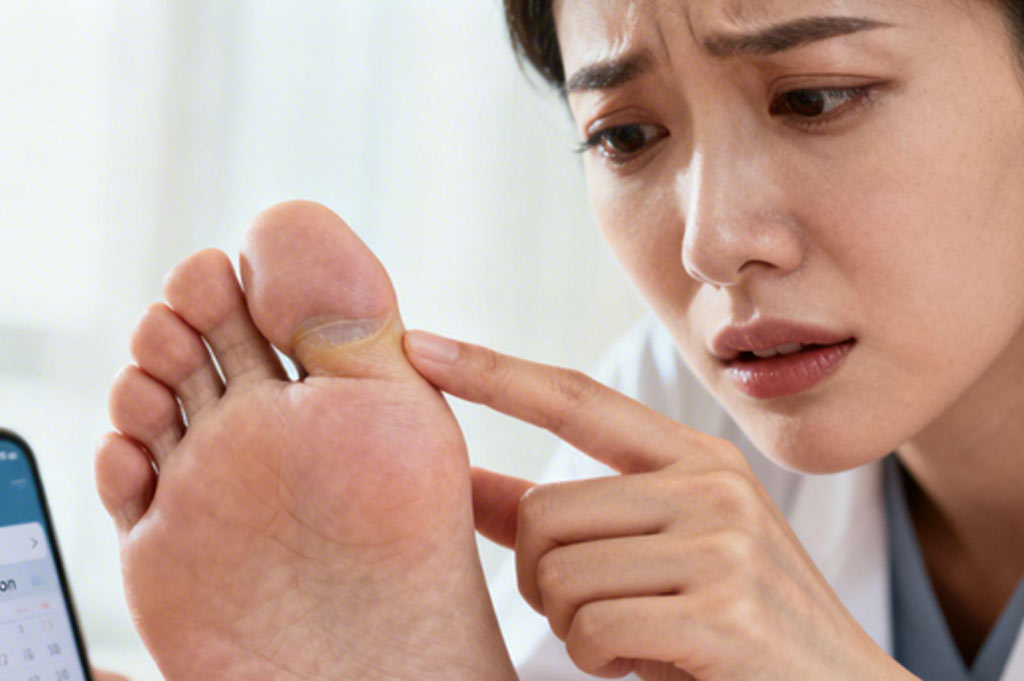
Know the Signs It's Time to Visit a Flagstaff Podiatrist
Self-care is a good start. It is not always enough.
The right time to see a podiatrist is usually earlier than people think. Many patients wait until they cannot wear normal shoes, cannot finish a walk comfortably, or have already changed the way they move to avoid pain. By then, the bunion has often been affecting more than the big toe joint for a while.
Daily life is the true test
If a bunion is just visible but not disruptive, home care may be reasonable. If it is changing how you live, work, or move, it deserves a proper evaluation.
These signs matter:
Pain with routine walking: Not just after a long hike, but with ordinary errands or workdays.
Difficulty finding shoes that fit: You keep buying around the bunion instead of buying what you want to wear.
Increasing prominence of the bump: The joint looks more irritated or more angled over time.
Burning, tingling, or numbness: Nerve irritation can develop when the forefoot becomes crowded.
Second-toe problems: Corns, calluses, rubbing, or hammertoe changes can appear as pressure shifts.
A bunion rarely stays isolated. When one part of the foot starts taking extra stress, nearby joints and toes often react.
Athletes and active adults should come in sooner
People who run, hike, coach, ski, or spend long hours on their feet often minimize bunion pain because they are used to pushing through discomfort. That delay can backfire.
If you are changing stride, avoiding push-off through the big toe, or cutting activity because the bunion keeps flaring, a podiatry visit is worthwhile. The issue is not only pain. It is the way compensation can affect the rest of the foot and ankle.
For active patients, a good exam helps answer practical questions:
Is the main problem pressure from footwear?
Is the bunion being driven by poor mechanics?
Is there joint stiffness, inflammation, or both?
Will orthotics, therapy, or more advanced conservative care likely help?
That kind of clarity is hard to get from internet advice alone.
Children and teens need special attention
Bunions in younger patients deserve early evaluation. Parents often assume they should just wait until a child is older, especially if the bunion is not yet severe. That can miss an important window for non-surgical care.
Verified clinical guidance notes that for pediatric and adolescent patients, early conservative treatment is especially important because surgery has poorer outcomes and higher recurrence in those who are still growing. The same source reports that hands-on muscle strengthening and custom orthotics show a 60 to 75% stabilization rate in growing feet, helping prevent up to 40% of cases from progressing to the point where surgery may be considered (non-surgical bunion treatment for pediatric and adolescent patients).
This is one of the clearest reasons not to “just watch it” in a child.
A young athlete in Flagstaff may be dealing with:
pressure from cleats or sport shoes
uneven loading during running and jumping
muscle imbalance during growth
early joint irritation that has not yet become constant pain
When addressed early, many younger patients can do well with strengthening, footwear changes, and support rather than waiting for the problem to become more fixed.
If you have diabetes or circulation concerns, do not delay
A bunion that rubs repeatedly can create skin problems. For patients with diabetes, neuropathy, or circulation issues, even minor rubbing matters more because the skin and soft tissue may not tolerate pressure well.
If the area becomes red, forms a sore spot, or you have reduced sensation, professional care is the safer choice. In those cases, bunion treatment is not only about comfort. It is also about protecting the skin and lowering risk.
What to expect at a podiatry visit
A podiatry appointment for a bunion should feel practical, not intimidating. You are not showing up to be pushed toward surgery.
A useful visit usually includes:
Part of the visit
What it helps determine
History of symptoms
What triggers pain and how long it has been building
Foot and gait exam
How the bunion affects walking and weight distribution
Shoe discussion
Whether footwear is a major aggravating factor
Treatment plan
Which conservative options fit your stage and lifestyle
The point of seeing a podiatrist is not to make the process more complicated. It is to stop guessing.
Bunion pain can come from pressure, inflammation, stiffness, weak foot mechanics, or a mix of all four. The right treatment depends on which of those is driving your symptoms. Once that is clear, treatment becomes more efficient and usually more successful.
If you have been searching for how to treat a bunion without surgery, the most productive next step is often a conservative treatment plan built around how your foot functions in real life.
If bunion pain is limiting your walks, workouts, workdays, or your child’s sports activity, schedule an evaluation with Flagstaff Foot Doctors. A thorough exam can identify what is causing the pain, which non-surgical options make sense for your foot, and how to build a plan that helps you move more comfortably in Flagstaff and the surrounding Northern Arizona communities.174
Pain under the heel is a frequent complaint and can stem from several conditions. The most common cause is plantar fasciitis involving irritation of the thick band of tissue that supports the arch. This often leads to sharp discomfort with the first steps in the morning, or after long periods of rest. Tenderness is usually felt along the bottom of the heel. Another source may be a stress injury to the heel bone. This type of pain often worsens with activity, and may feel deeper or more constant. Nerve irritation can also create burning, tingling, or shooting sensations that travel into the arch. In some cases, thinning of the natural fat pad under the heel reduces cushioning and leads to soreness when standing on hard surfaces. Because symptoms can overlap, a careful examination is important. If you have ongoing pain beneath your heel, it is suggested that you see a podiatrist for a proper diagnosis and appropriate treatment.
Many people suffer from bouts of heel pain. For more information, contact Anthony Rosales, DPM of Flagstaff Foot Doctors. Our practitioner can provide the care you need to keep you pain-free and on your feet.
Causes of Heel Pain
Heel pain is often associated with plantar fasciitis. The plantar fascia is a band of tissues that extends along the bottom of the foot. A rip or tear in this ligament can cause inflammation of the tissue.
Achilles tendonitis is another cause of heel pain. Inflammation of the Achilles tendon will cause pain from fractures and muscle tearing. Lack of flexibility is also another symptom.
Heel spurs are another cause of pain. When the tissues of the plantar fascia undergo a great deal of stress, it can lead to ligament separation from the heel bone, causing heel spurs.
Why Might Heel Pain Occur?
Wearing ill-fitting shoes
Wearing non-supportive shoes
Weight change
Excessive running
Treatments
Heel pain should be treated as soon as possible for immediate results. Keeping your feet in a stress-free environment will help. If you suffer from Achilles tendonitis or plantar fasciitis, applying ice will reduce the swelling. Stretching before an exercise like running will help the muscles. Using all these tips will help make heel pain a condition of the past.
If you have any questions, please feel free to contact our office located in Flagstaff, AZ. We offer the newest diagnostic and treatment technologies for all your foot care needs.